The Signs You Can't Ignore
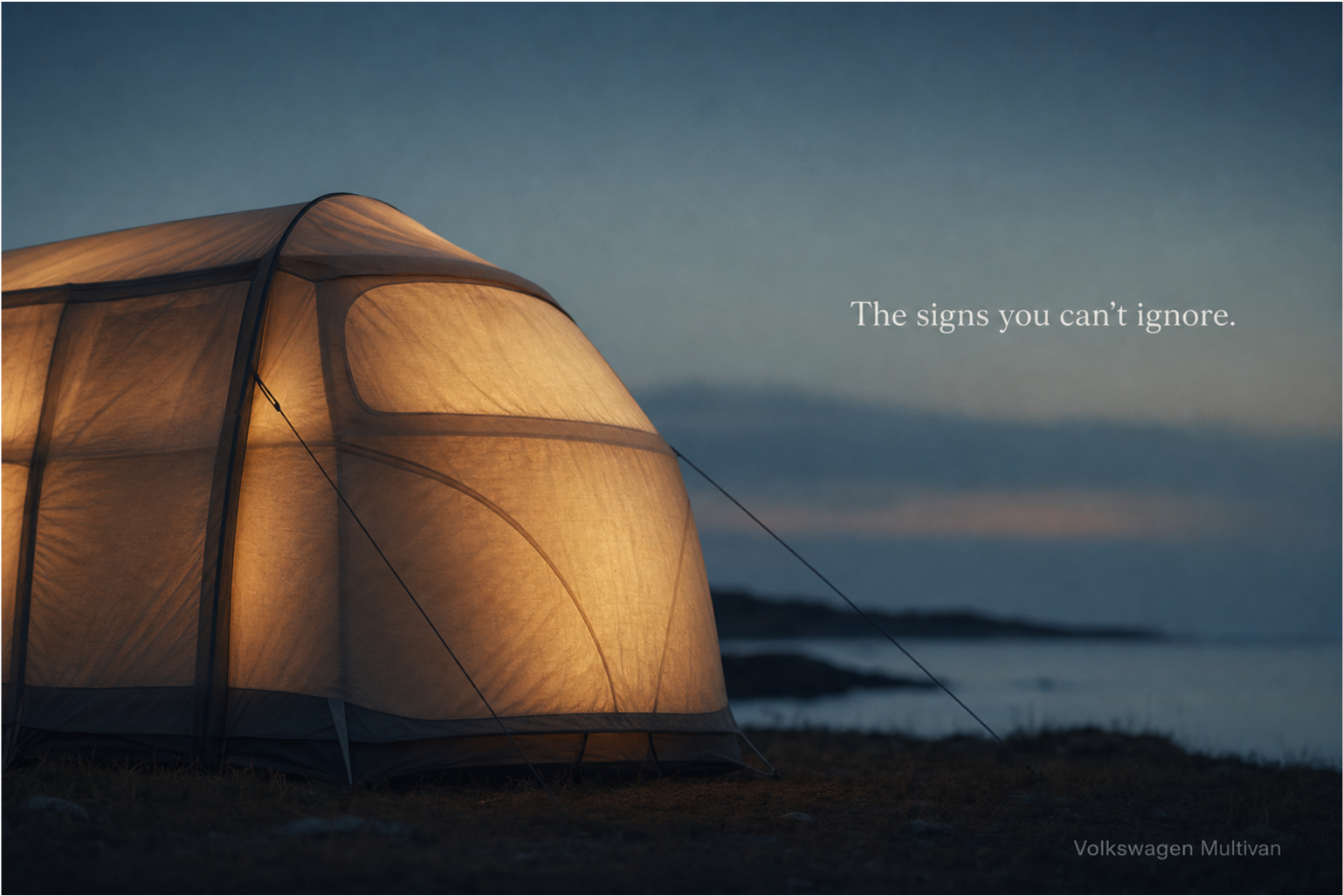
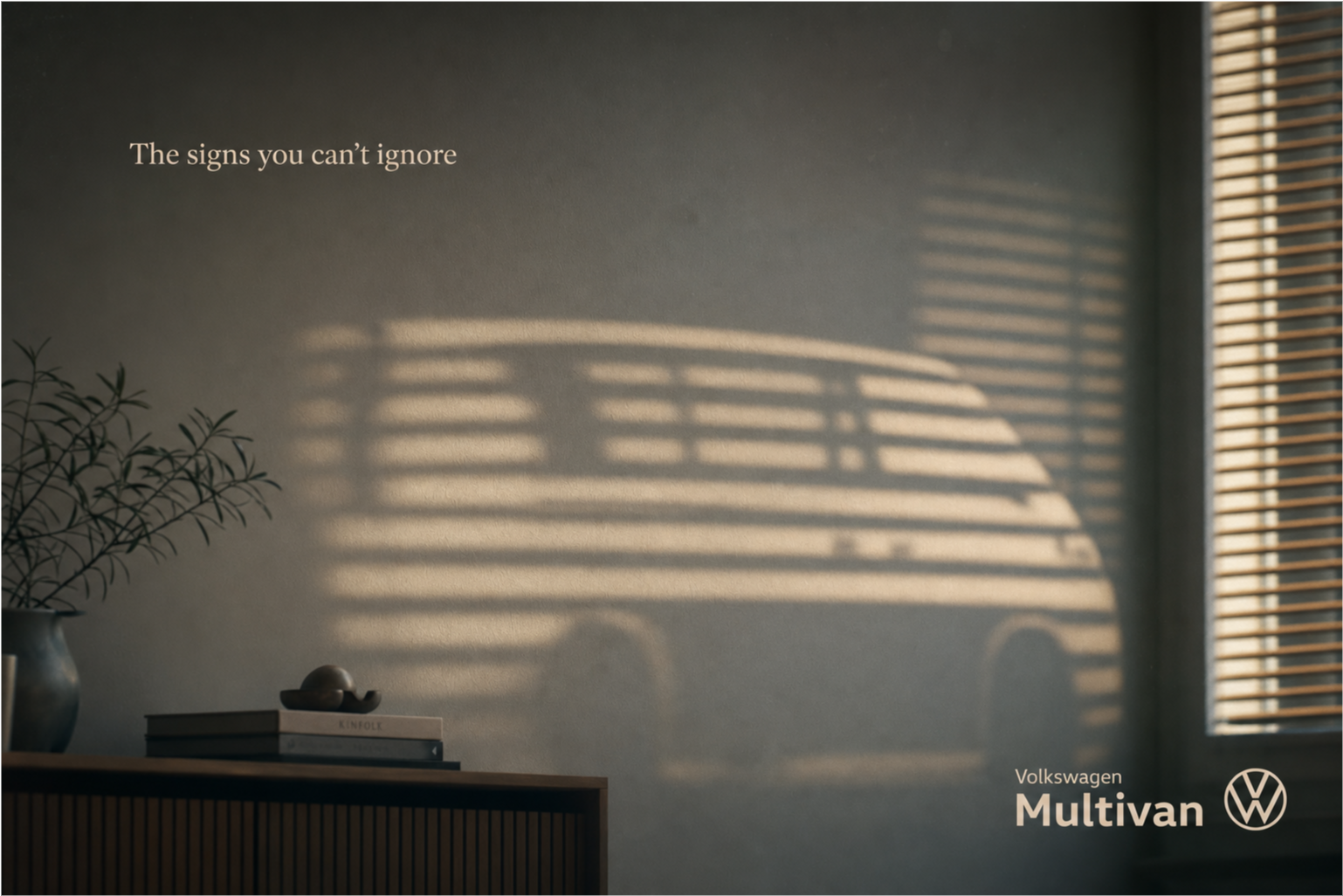
A campaign built on a single human truth: you don't decide to buy a Multivan. You notice you already need one.
The one-liner
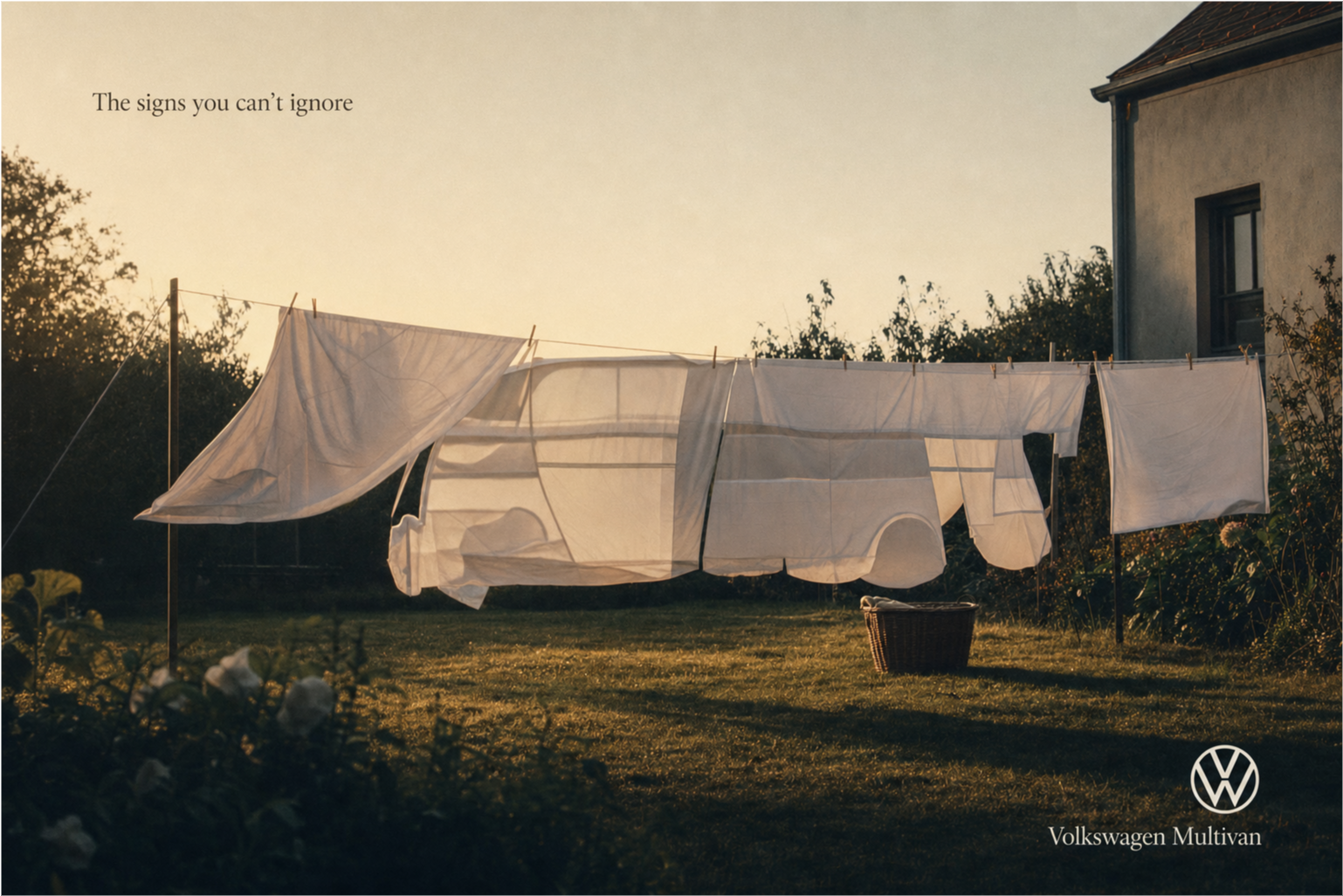
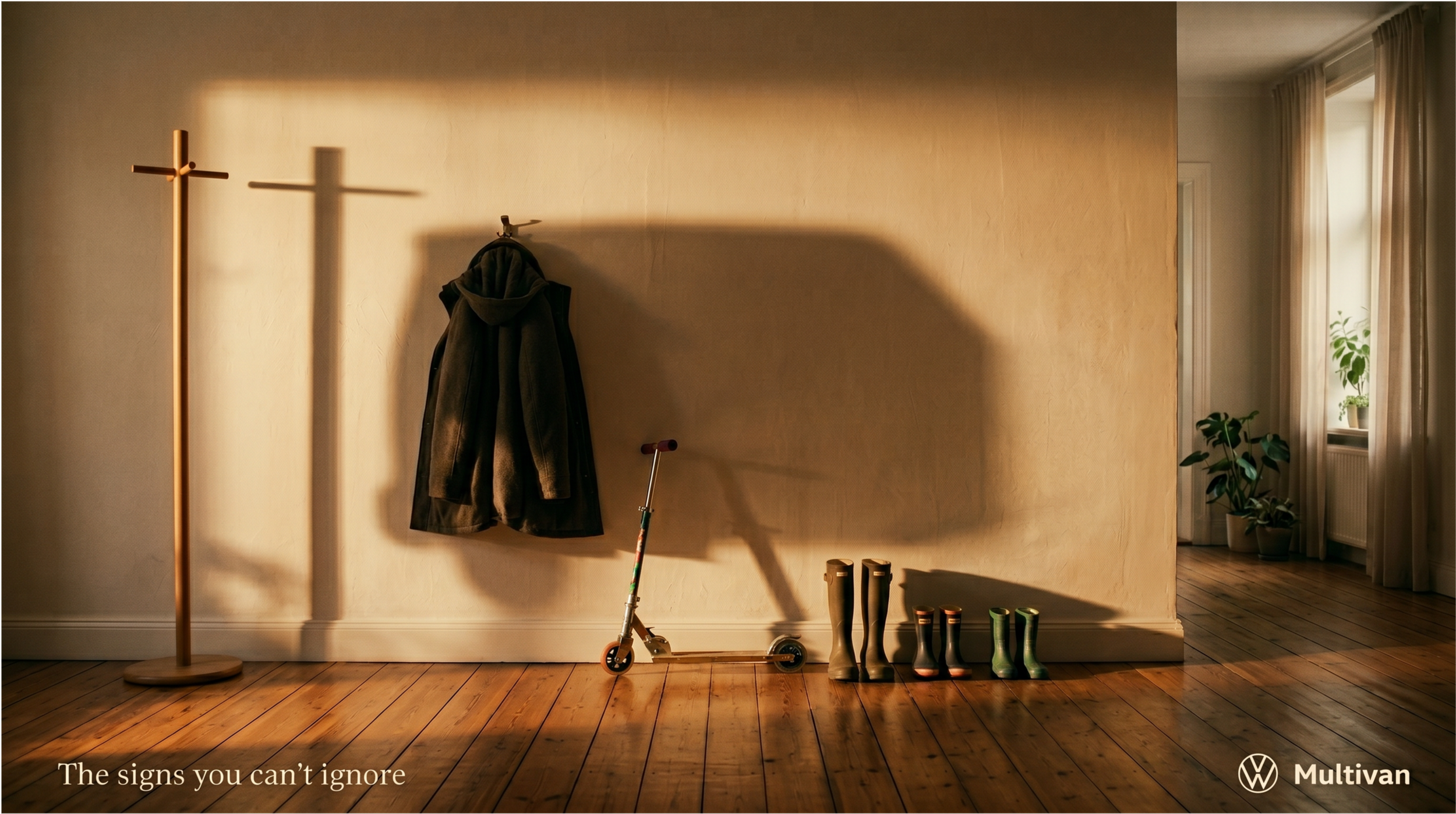
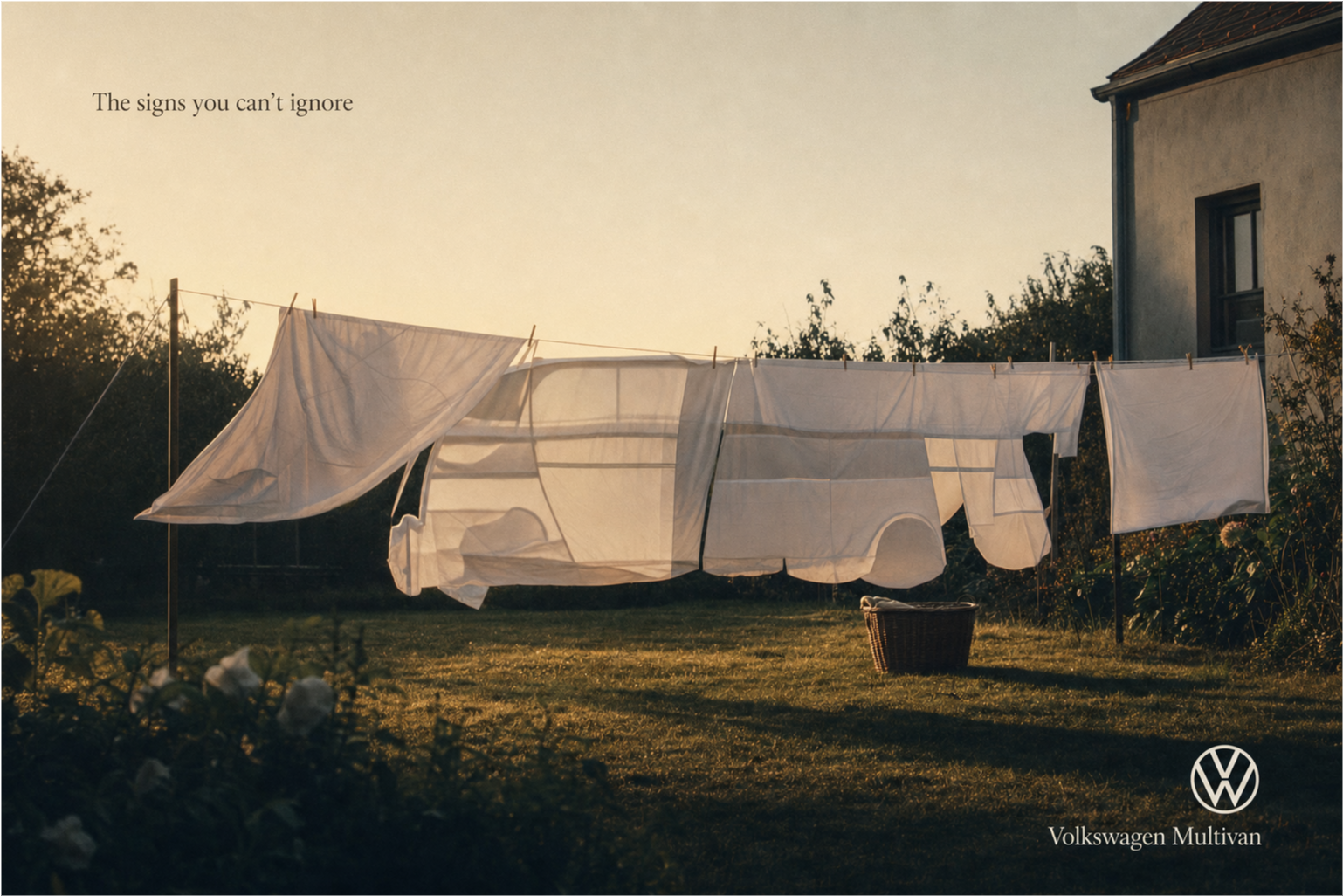
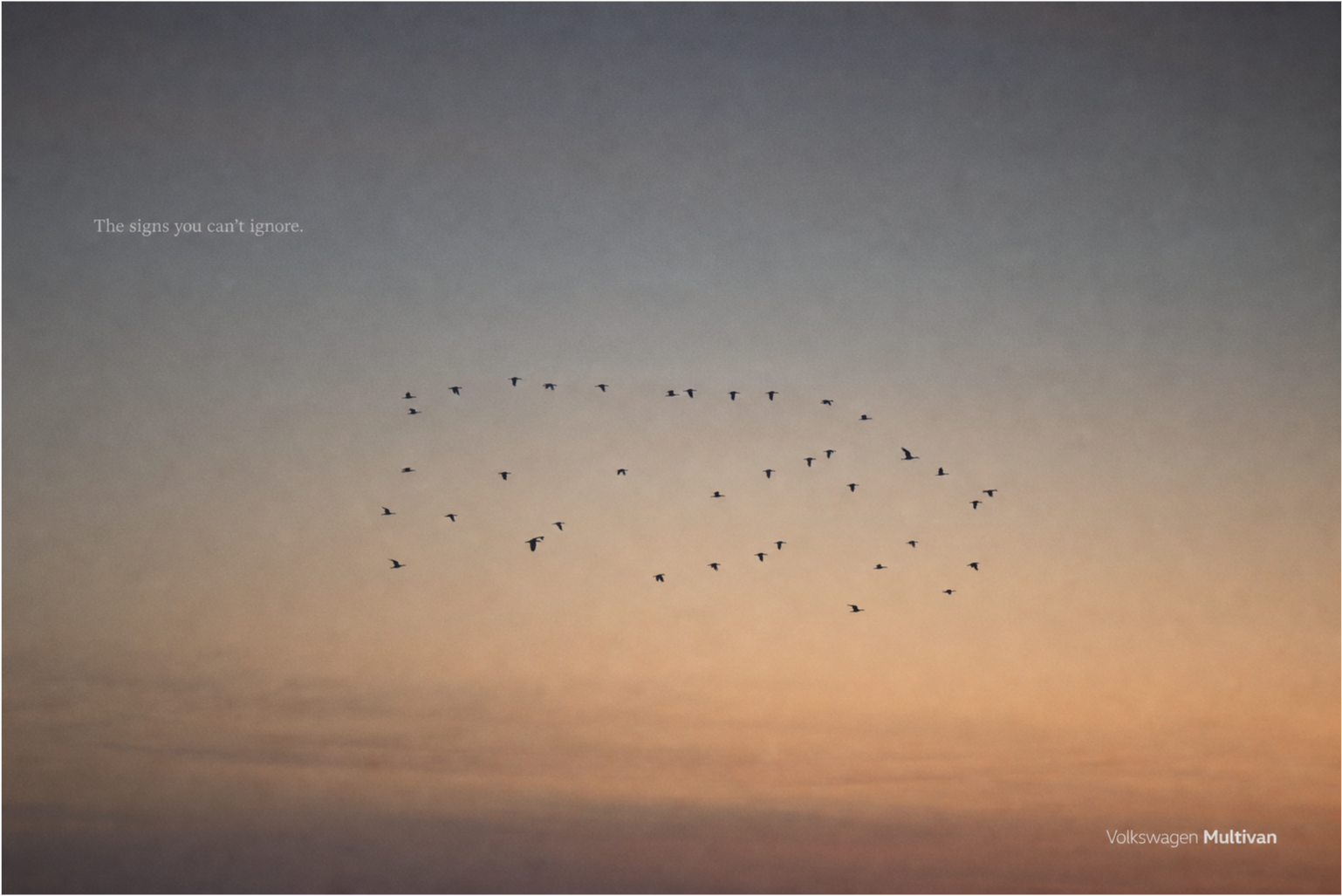
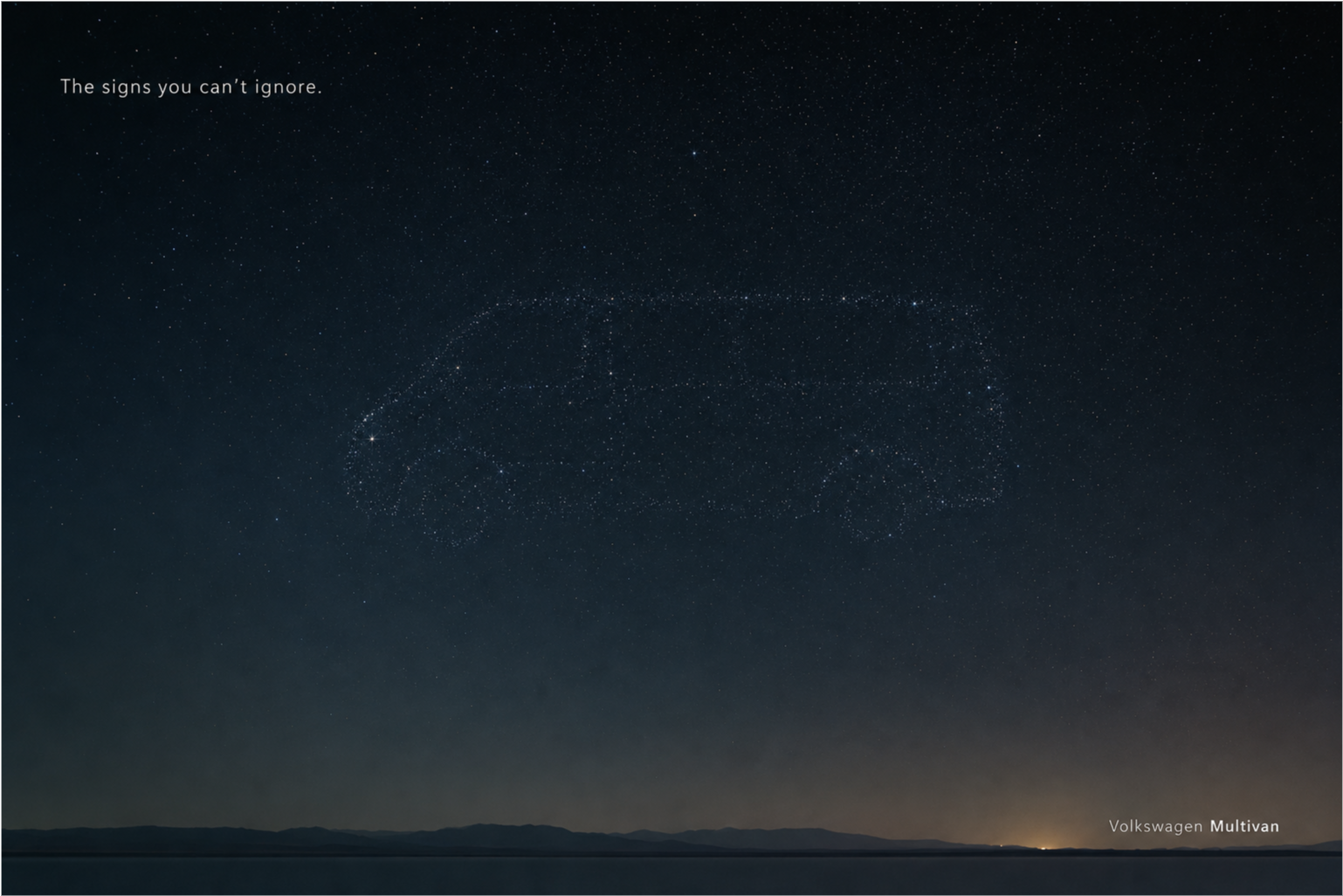
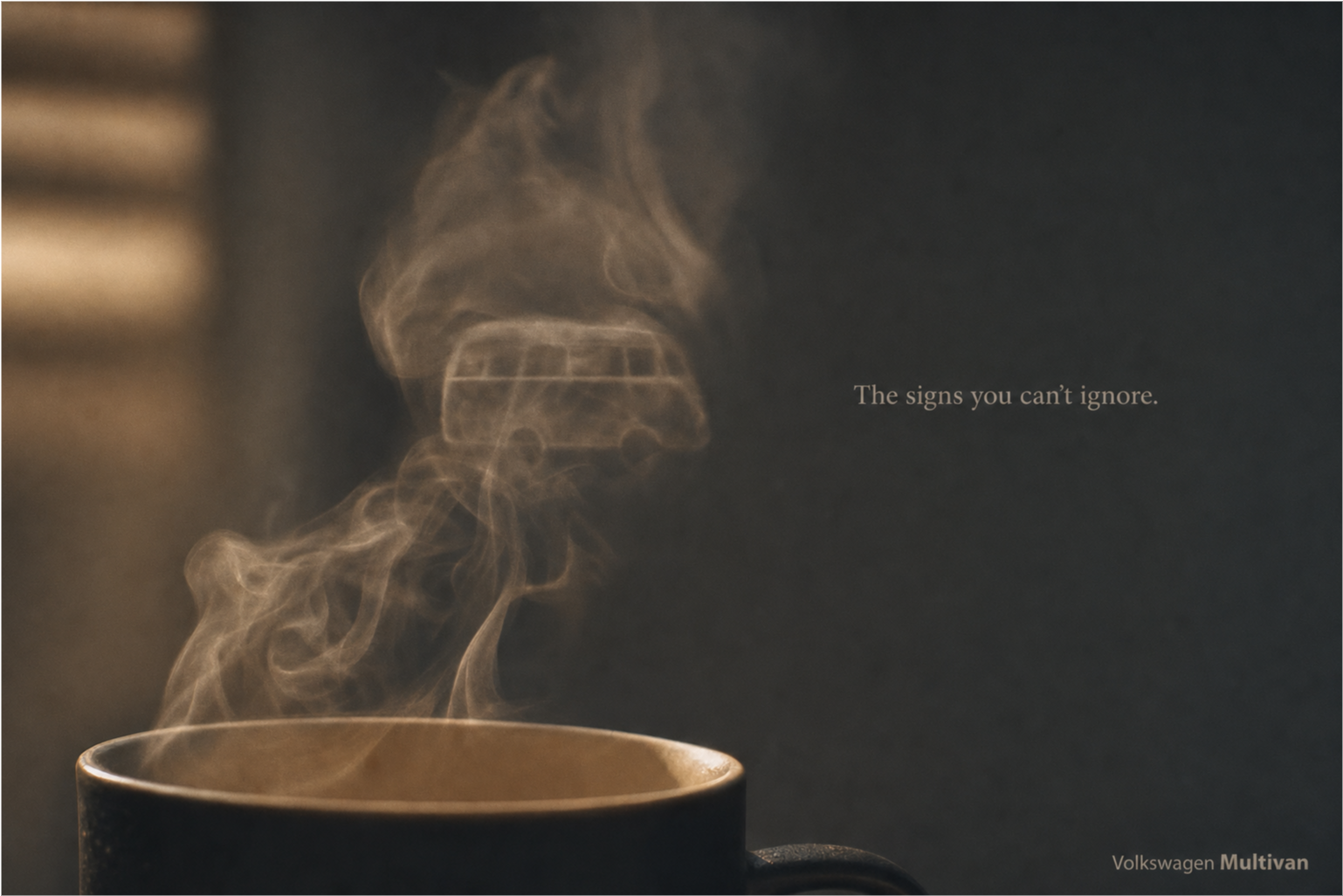
Everyday life keeps drawing the same shape. Steam off a morning coffee. Washing on the line. A flock turning at dusk. The signs are everywhere once you start seeing them, and once you see them, you can't stop.
the brief
A premium, surreal print and social campaign for the Multivan that avoided the obvious, no hero shots on empty mountain roads, no families grinning through open sliding doors.
The ask: create visual illusions where ordinary objects and moments quietly resemble the Multivan. Not a gimmick. A slow reveal. A sign telling you to buy one, hidden in plain sight.
The constraint that made it interesting: the illusion had to read without the line pointing at it. If you need the caption to see the van, the idea has failed.
The idea
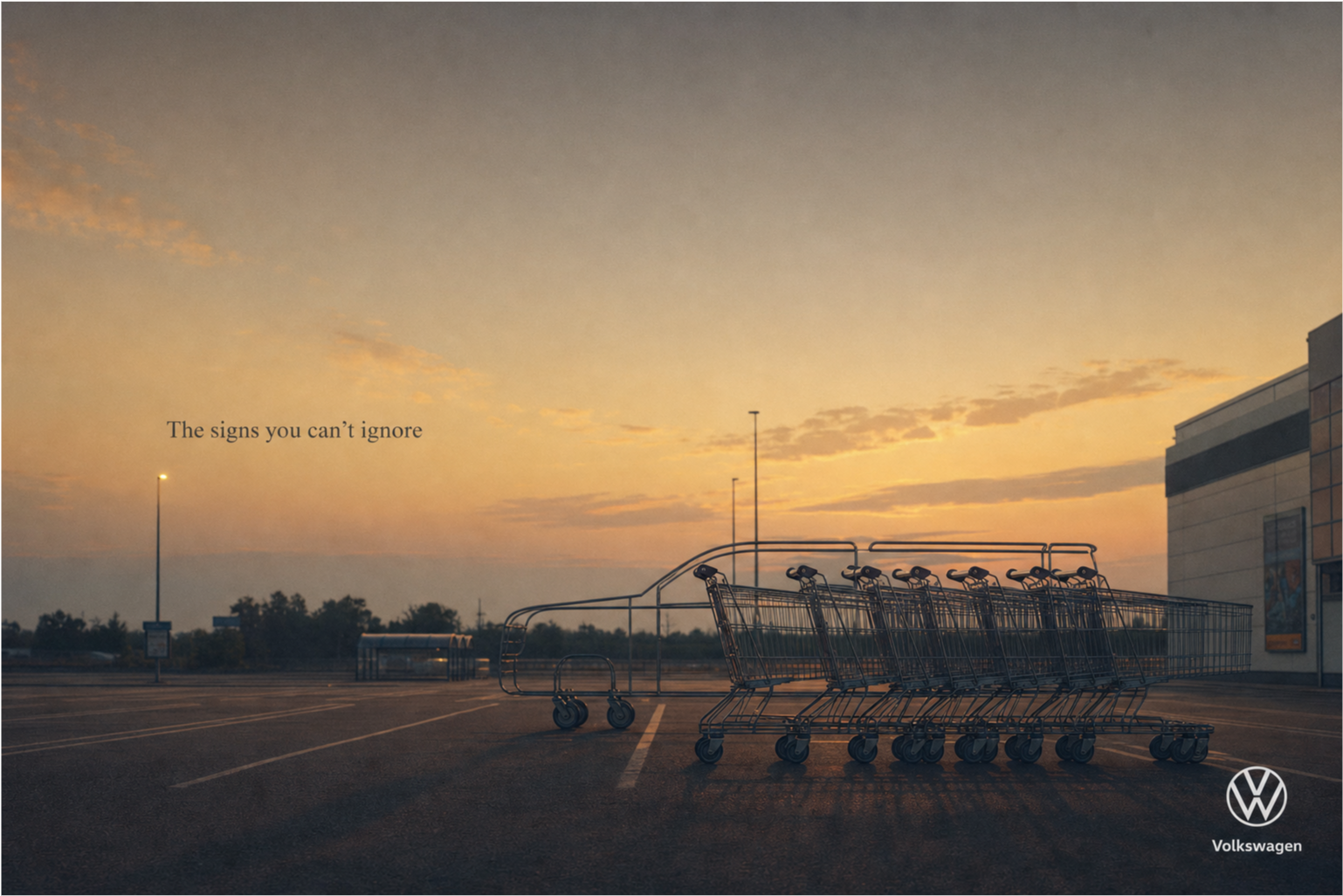
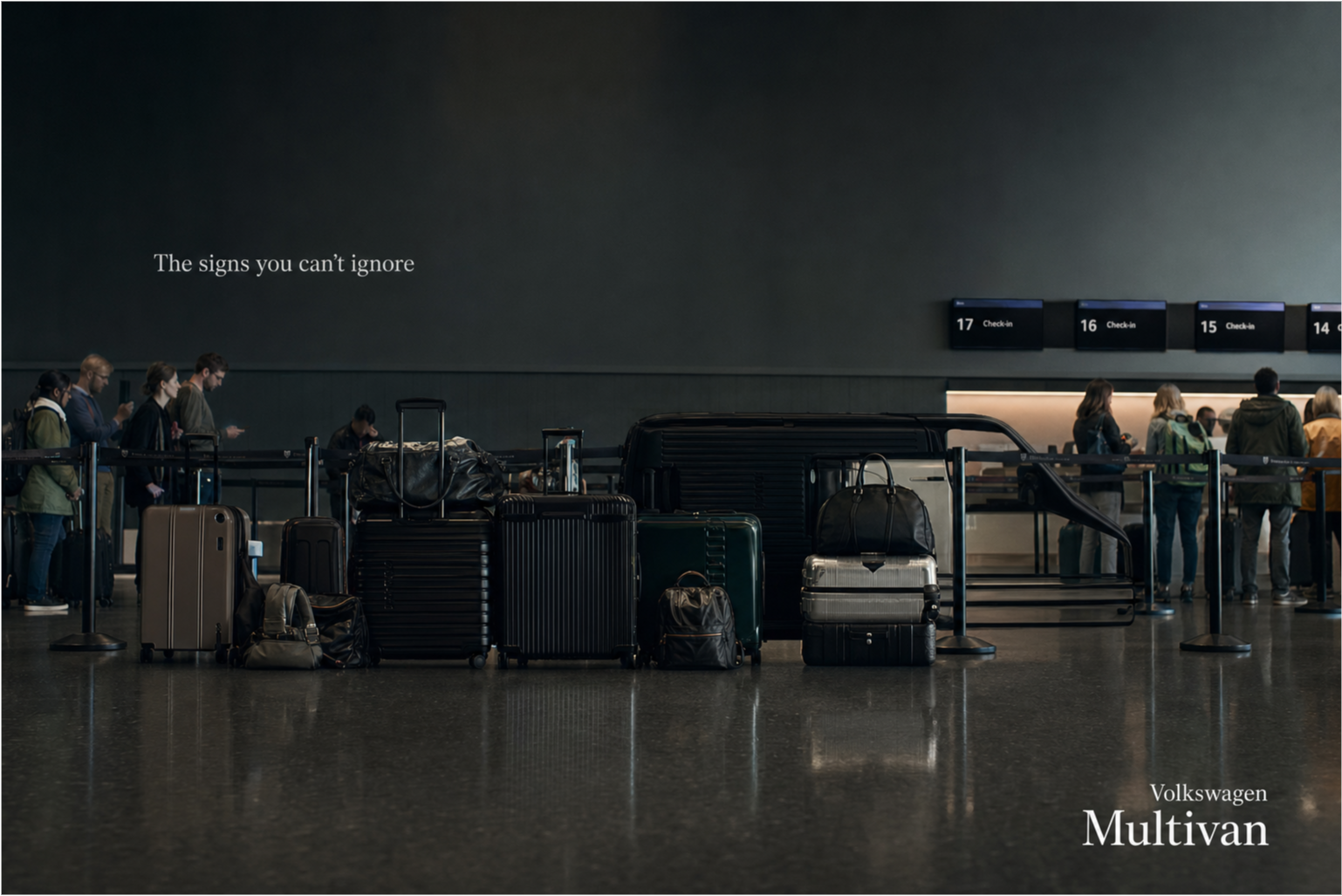
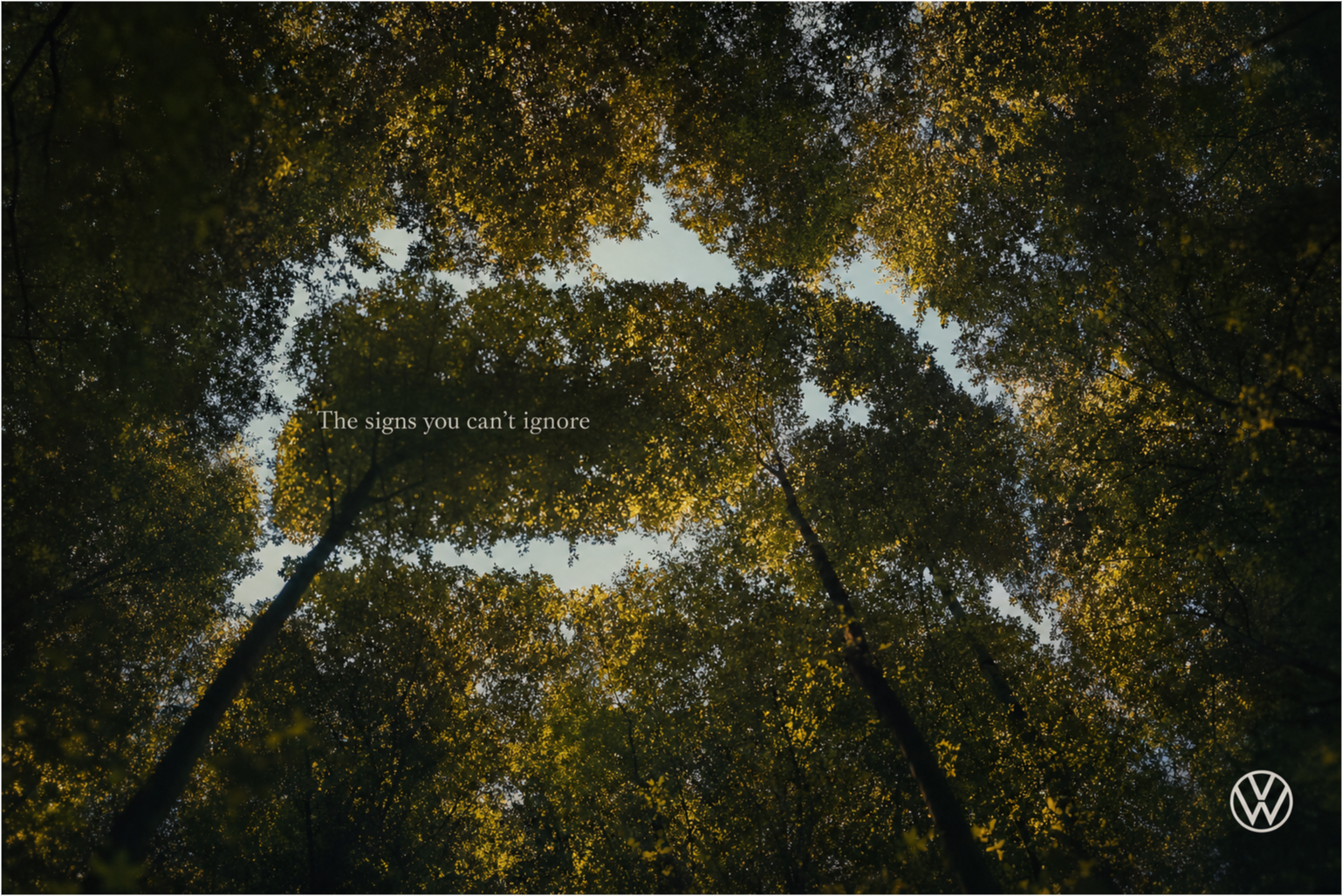
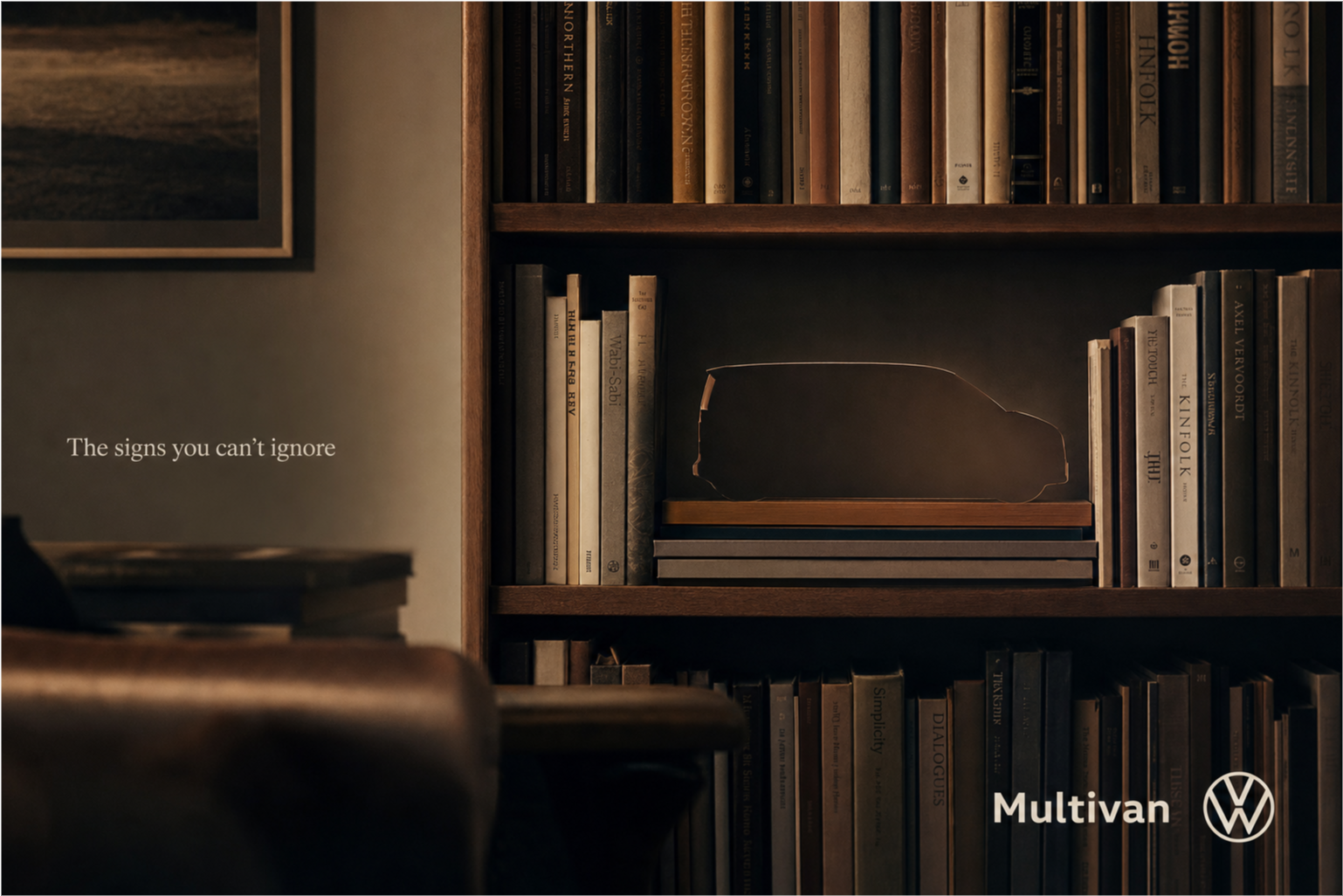
Most car advertising shows you the car. This campaign shows you the absence of one, and lets your eye finish the picture.
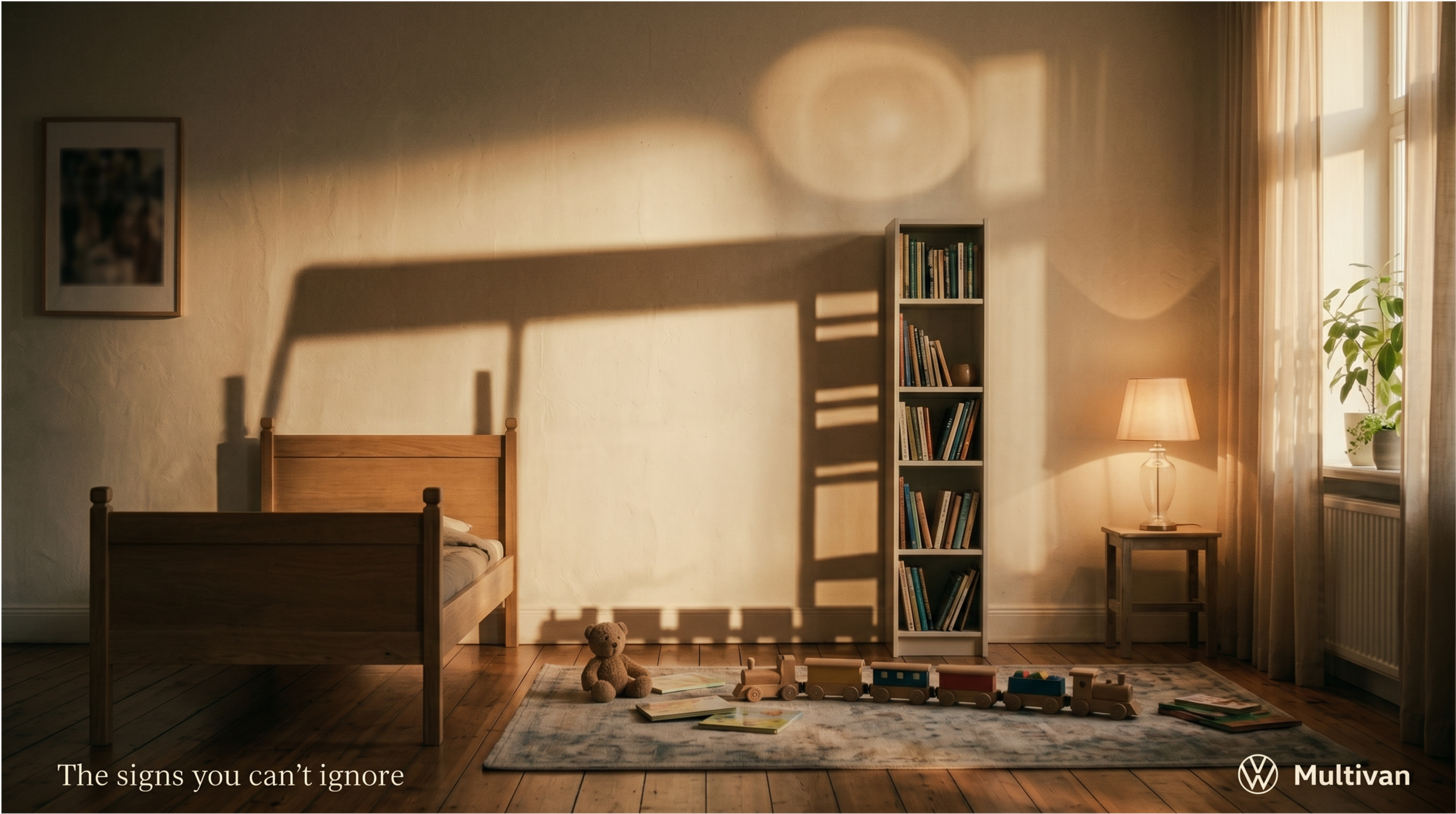
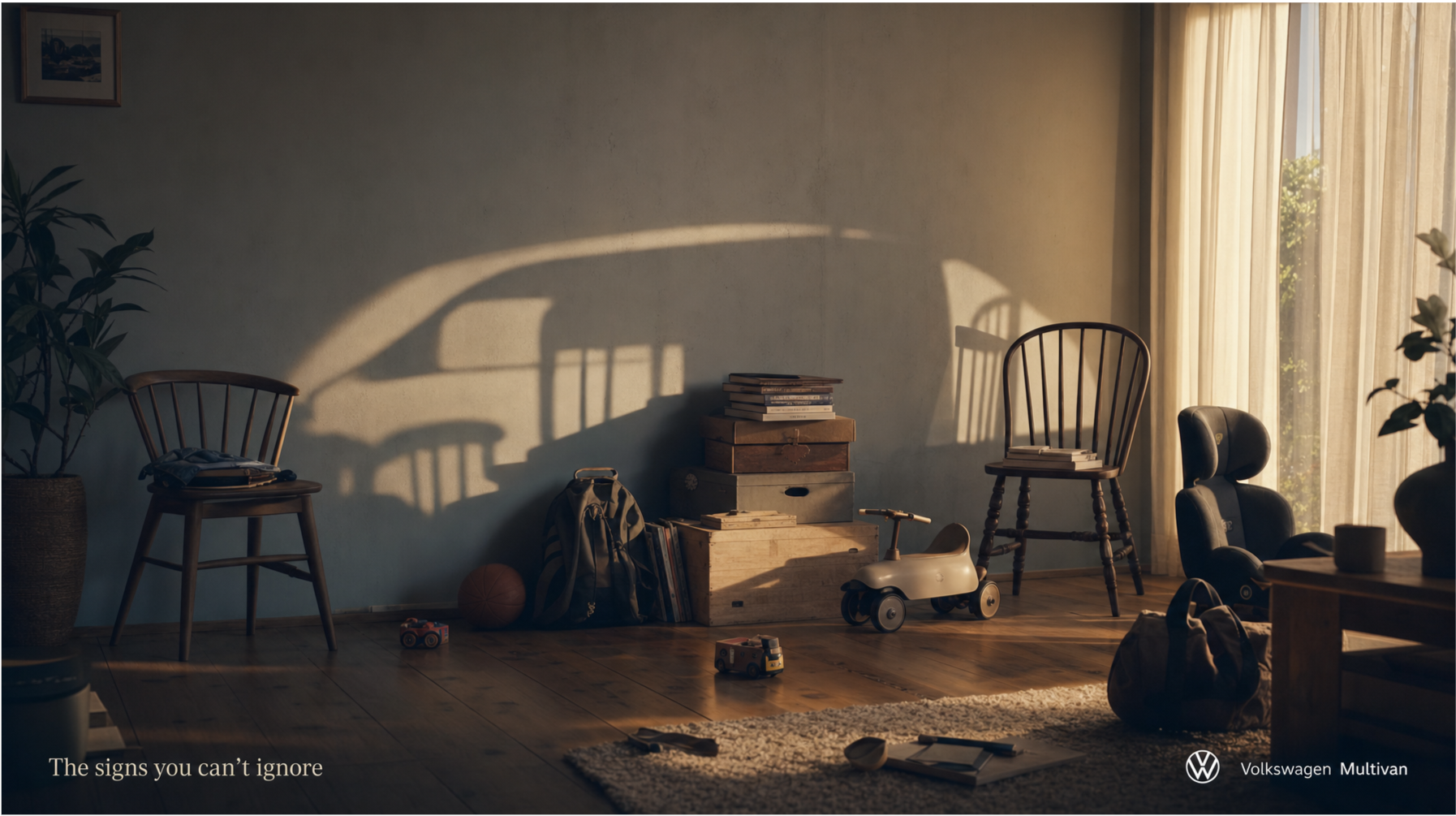
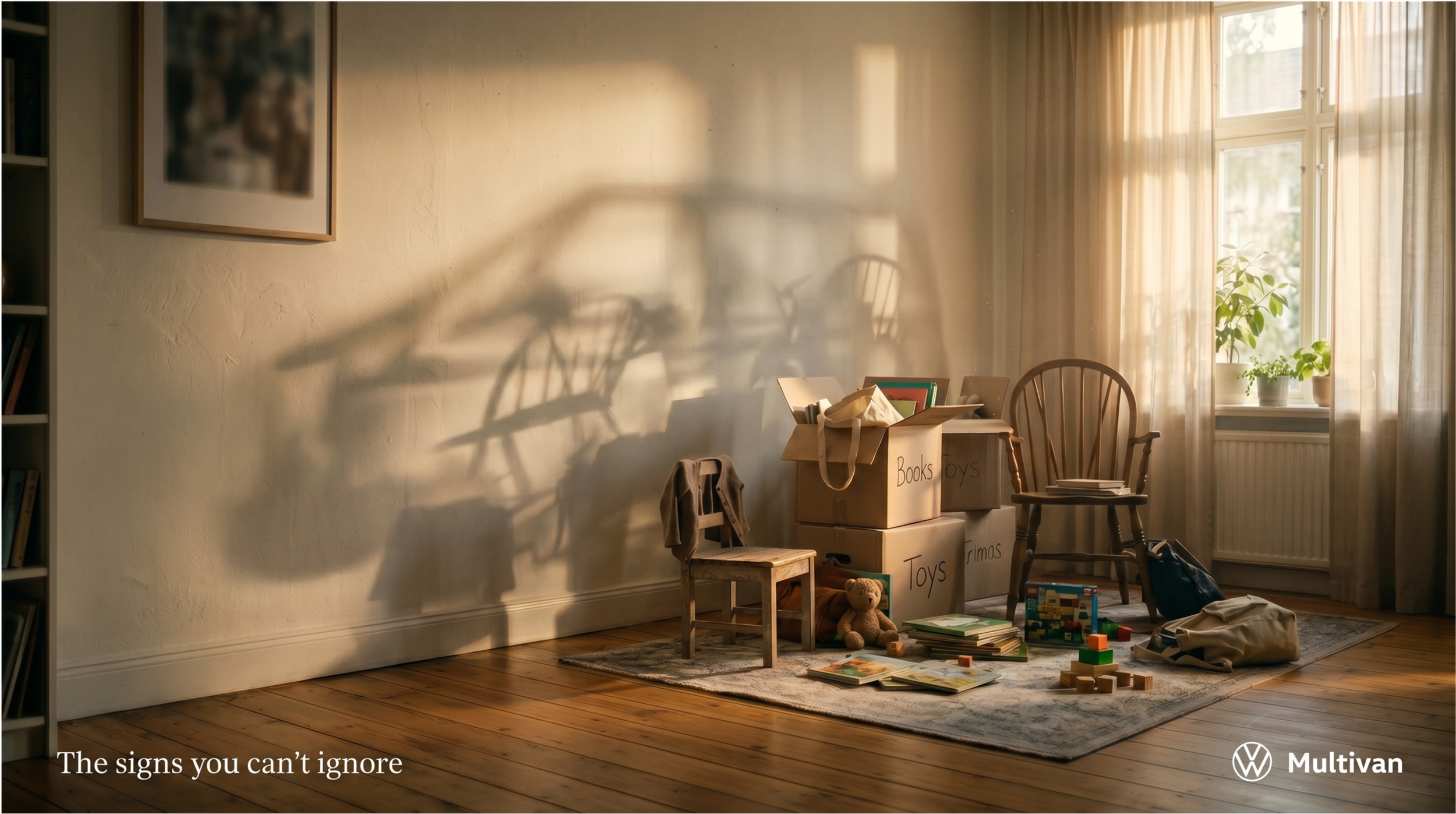
We treated the Multivan as something the world keeps trying to tell you about. It surfaces in coffee steam, in the shadow thrown across a nursery wall, in the negative space between books on a shelf. Each frame is a small coincidence that stops being a coincidence when you notice it happening everywhere.
The tension is the whole campaign: the more you try to ignore the sign, the louder it gets. That's the buying moment, made visible.
Why it works
It respects the viewer. No wink, no exclamation mark. The illusion trusts you to catch it, which flatters your attention and makes the reveal feel earned rather than sold.
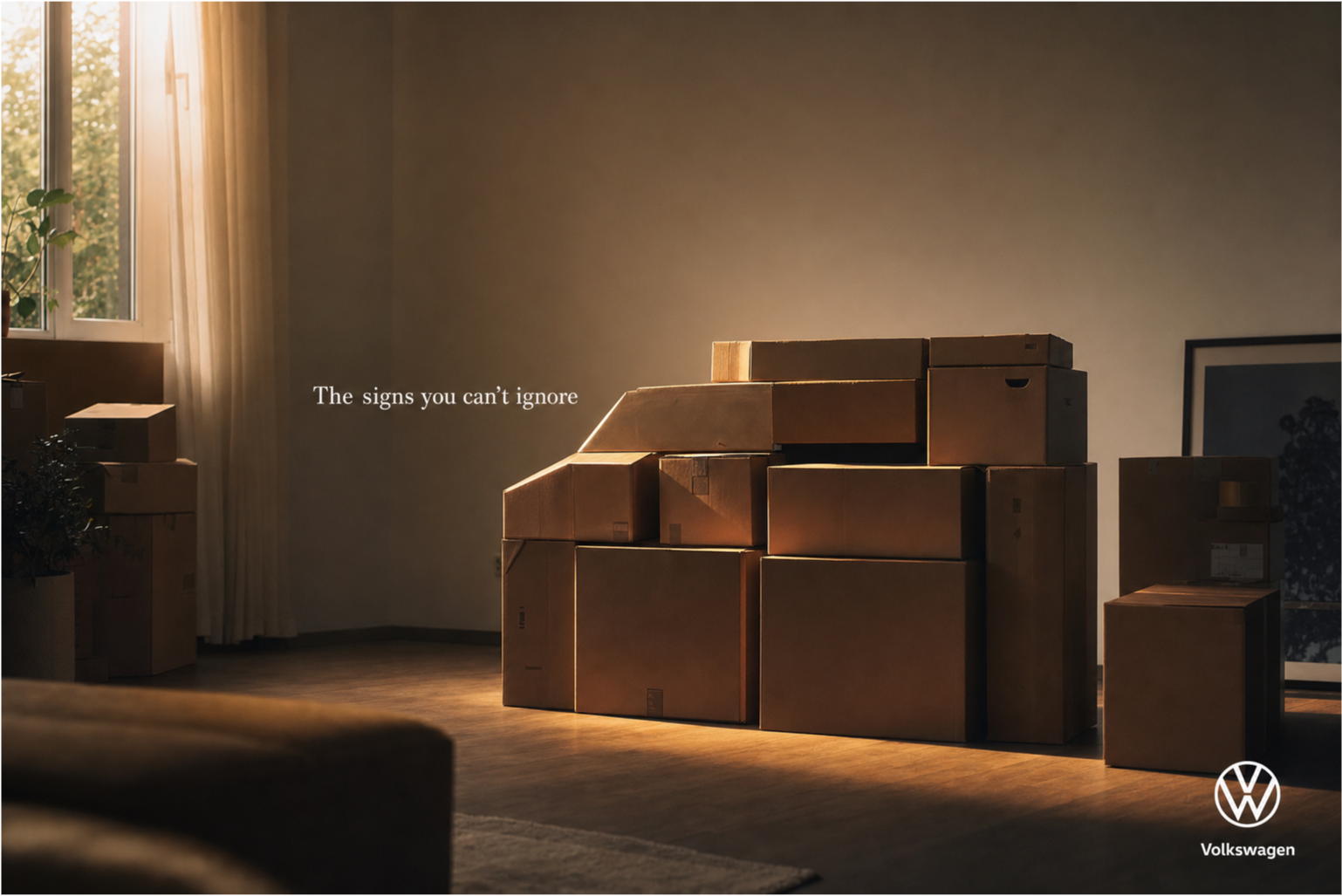
It sells the need, not the metal. Every frame is really about the life around the van, the wellies lined up by size, the moving boxes, the kit that no longer fits. The product is the answer to a question the image has already made you feel.
It's endlessly extendable. The mechanic — "spot the shape" — works across any object, any medium, any market. Print, OOH, social, motion. One idea, infinite executions, instantly recognisable as a family.
It reads at a glance and rewards a second look. Which is exactly what a scroll-stopping, save-worthy image needs to do.
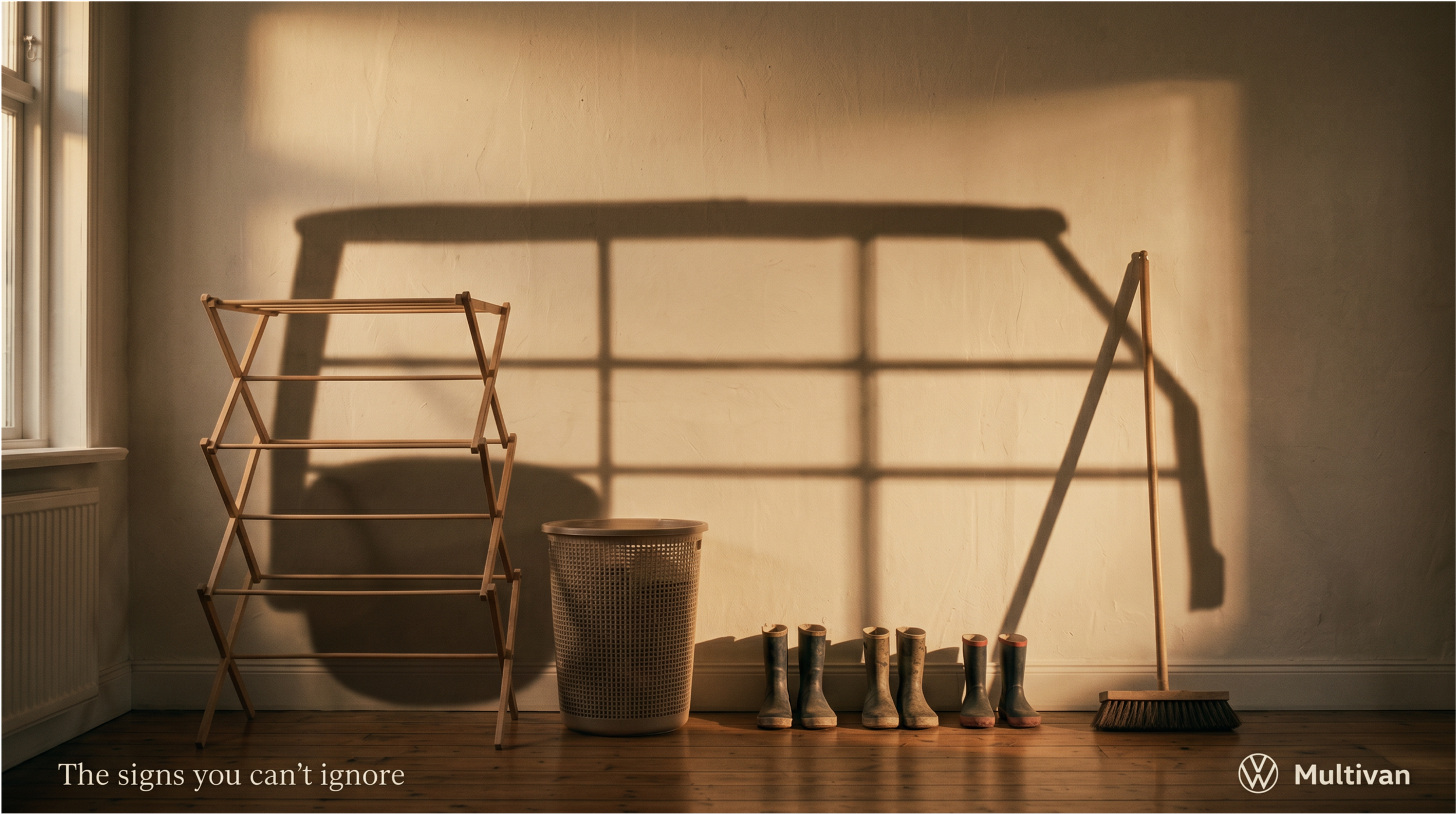
Craft & production
The entire campaign was developed and produced using generative AI, Adobe Firefly, with tight art direction to hold commercial safety, brand consistency and a single lighting language across every frame.
The production challenge wasn't generating images. It was restraint: keeping the illusions legible without tipping into novelty, holding one coherent golden-hour palette across wildly different scenes, and knowing which frames to kill so the set never felt like one idea photographed twice.